Diagnostic Suite Directions For Hearing First Enfield
This Resource Revised on 6th Aug 2026 at 3:18pm
Waxfree Guarantee™: The only ear wax removal clinic in Enfield offering the Waxfree Guarantee™.
We’re the only specialist microsuction ear wax removal clinic in Enfield providing Microsuction Earwax Removal and Manual Instrument Earwax Removal by our expert Audiologists. All of our earwax removal practitioners are hand-picked by our founder, Jason Levy. We really are the ear wax removal experts in Enfield.
Our convenient location in Enfield also serves Chase Side, Grange Park, Botany Bay, Potters Bar, Ponder’s End, Enfield Wash, Freezy Water, Bullsmore, Brimsdown, Broxbourne, Chingford, Chingford Mount, Chingford Hatch, Highams Park, Buckhurst Hill, Hale End, Waltham Cross, Waltham Abbey, Cheshunt, Bury Green, Goff’s Oak, Cuffley, World’s End, Oakwood, Osidge, Cockfosters, Hoddesdon, Nazeing, Epping, Epping Upland, Walthamstow, Upper Walthamstow, Woodford, South Woodford, Chigwell, Grange Hill, Chigwell Row, Debden, Loughton, High Beech, Theydon Bois, Wanstead, Redbridge, Aldersbrook and Edmonton.
Finding the Diagnostic Suite at Hearing First Enfield
When you are heading to the Diagnostic Suite at Hearing First Enfield, a little preparation can turn the journey into something far calmer and more manageable. It helps to think ahead about the final approach, not just the main route, because the last stretch is often where first-time visitors lose time. Using a sat nav can be useful, but it is wise to cross-check the street name, the clinic entrance and any nearby landmarks before you set out. If you are attending for a hearing assessment, earwax removal or an audiology review, arriving a few minutes early gives you breathing space to settle, check in and handle any paperwork without feeling hurried. Keep your booking confirmation close by, and if you are uncertain about the route, choose the clearest road rather than trying to improvise once you are near the destination. In Enfield, a simple plan can make the difference between a tense arrival and a smooth one.
Things to Confirm Before You Leave
- Check the appointment time carefully, then leave room for traffic, school runs or temporary road works that could slow a local journey.
- Keep your phone charged and your booking details within easy reach, so you can confirm information quickly if needed while travelling.
- Make sure you know the full postcode and building name, because clinics in Enfield can be easy to overlook if you are relying on memory alone.
- Bring hearing aids, spare batteries, previous reports or notes on ear symptoms if they may help the audiologist during the appointment.
- Decide whether you are attending for a hearing test, microsuction or a consultation, as different visits may benefit from slightly different timing.
A Simple Travel Habit That Helps
It is often best to arrive with enough time to walk in at an unhurried pace instead of rushing from the car or pavement. That small margin can make a real difference if you are carrying documents, if mobility is limited, or if you simply want to begin your audiology appointment in a more settled frame of mind. For people coming for ear wax removal or hearing checks, a calm arrival also gives you a better chance to describe symptoms clearly, which can help the consultation start smoothly.
A Small Detail That Can Save Confusion
When you search for directions, enter both the street name and the clinic name, because that lowers the chance of ending up at a nearby address with a similar label.
Why This Matters for First-Time Visitors
First-time visitors often find that local detail matters more than expected, especially around clinics, surgeries and shared medical buildings. A precise route search, a brief final check when you arrive and a few spare minutes can make your visit to Hearing First Enfield feel much easier and more dependable.
Arriving for Your Hearing Appointment with Less Pressure
Audiology appointments tend to go more smoothly when the journey is simple, because you arrive less flustered and better able to talk through symptoms, blocked-ear concerns or changes in hearing. If you are going to Hearing First Enfield for microsuction, hearing aid guidance or a diagnostic hearing assessment, it helps to treat the journey as part of the visit rather than something separate from it. That means checking travel options beforehand, allowing for local congestion and thinking through where you will stop once you reach the building. Many patients find it useful to prepare the day before, especially if they are older, travelling with a companion or coping with reduced hearing in busy surroundings. If you can, avoid leaving the route until the last minute, because that often creates unnecessary pressure and can make parking or finding the correct entrance more awkward. A clear plan supports better communication with the audiologist and gives your appointment a calmer start.
Steps That Make the Journey Easier
- Bring any relevant documents, such as referral letters, previous hearing test results or notes about tinnitus, pressure or wax build-up.
- Set off early enough to allow for traffic while still arriving in a sensible window before your allotted time.
- Use a navigation app, but do not depend on it alone, because local knowledge, landmarks and building names can matter just as much.
- Keep your hearing aids, spectacles and mobile phone together in one bag or pocket, so they are easy to find on arrival.
- If someone is driving you, agree where they can stop or park in advance, rather than deciding at the last moment.
- Review your route the evening before, then look out for closures, delays or diversions that might affect roads in and around Enfield.
If You Are Delayed on the Way
If traffic or parking slows you down, stay composed and contact the clinic as soon as you can do so safely. A short delay is usually much easier to manage when the team knows you are on your way. For diagnostic hearing appointments, being on time matters because the audiologist may need space for testing, discussion and any follow-up advice. If you have symptoms such as pain, discharge or sudden hearing loss, do not assume ear wax is the cause. Seek the right medical advice promptly and explain the issue clearly when you arrive.
A Tip for Patients with Hearing Loss
Before you leave, save the clinic name in your phone and keep the screen brightness high, so directions are easier to check without straining to read them in a rush.
Why a Calm Arrival Supports Better Care
When you arrive with time in hand, you are more likely to explain symptoms clearly, ask useful questions and remember the guidance you are given. That is particularly helpful for hearing tests, aural care and any discussion about the next most suitable step.
Careful Ear Wax Removal with an Audiologist Near You
Your ears and hearing are delicate, and they deserve expert care. Some providers hand ear wax removal to lay people, treating it as a routine task, but we believe it calls for the skill and judgement of a trained Audiologist.
At our clinic, only qualified Audiologists carry out ear wax removal, so your ears are looked after by a specialist with detailed knowledge of ear anatomy and physiology. That approach is designed to reduce the risk of injury and provide a safe, effective procedure shaped around your needs. Your hearing is too important to leave to chance, and we remain committed to a high standard of care.
Hearing First Enfield – Microsuction Ear Wax Removal Enfield Tn34 Map
center>
Audiologist-Led Ear Wax Care in Enfield
Choosing ear wax removal with an Audiologist can give you added confidence that both your ear health and hearing are being considered together. Hearing First Enfield makes it clear that earwax removal is not viewed as a routine task to hand off casually, but as a procedure that needs specialist understanding of the ear canal, ear anatomy and individual hearing needs. That can feel especially reassuring if your ears feel blocked or if you are unsure which removal method may suit you best.
At the clinic, qualified Audiologists perform ear wax removal, using their knowledge of ear physiology to support a careful, tailored appointment. The stated aim is to minimise avoidable risk of injury while still delivering effective treatment for wax build-up. Microsuction and manual instrument ear wax removal are both described on this page, and the most suitable option will depend on your ears and the assessment made during your visit.
If you want a more comfortable experience, share any ear symptoms, previous procedures or worries when you arrange your appointment. If you are dealing with pain, discharge, sudden hearing changes or other concerning symptoms, seek appropriate clinical advice before assuming ear wax is the cause. Book with Hearing First Enfield when you want ear wax removal from an Audiologist-led team focused on careful hearing care.
Making Parking and Local Access Less Complicated
Car Parks Near Hearing First Enfield
- Enfield Town Cycle Parking, approximately 0.2 miles from Hearing First Enfield. View on Google Maps.
- Church Ln Parking, approximately 0.2 miles from Hearing First Enfield. View on Google Maps.
- Genotin Road Car Park, approximately 0.2 miles from Hearing First Enfield. View on Google Maps.
Parking information and place links are provided by Google Maps. Check restrictions and charges locally.
For many patients, the real challenge is not getting into Enfield itself, but those last few minutes from car, pavement or bus stop to the clinic door. Planning for access matters if you have reduced mobility, are carrying a walking aid or need someone with you to help you settle in comfortably. Before you travel, think about where you might stop, whether you need step-free access and how long it will take to get from parking to reception. If you are attending for microsuction ear wax removal or a diagnostic hearing test, arriving relaxed can help you focus on the appointment rather than the journey. It is sensible to keep the route simple, choose the clearest entrance and avoid arriving at exactly the last minute. The easier the final approach, the less likely you are to feel flustered once you reach the building, particularly if it is your first visit or you are already dealing with hearing-related discomfort.
Things to Consider as You Get Close
- Look for a safe parking space or a practical drop-off point before you travel, rather than making the decision only when you are nearly there.
- Allow time to read signs, find the correct entrance and confirm the clinic name, especially if you are unfamiliar with the area.
- Keep any mobility aid, umbrella or coat within easy reach, as Enfield weather and local pavements can make the final stretch more demanding than expected.
- If you are arriving with a relative or carer, agree where you will meet if they drop you off before parking.
- Check whether you need level access, extra walking time or help with stairs, because those details can shape your arrival plan.
A Good Way to Reduce Hassle Near the Building
Give yourself a short window to move from vehicle to reception, because that leaves room for unexpected delays such as busy parking spaces, minor detours or going to the wrong door first. If you have a hearing issue, approaching calmly can also help, since rushing often makes conversation harder as soon as you step inside. A well-planned arrival is especially useful for anyone attending for hearing aids, audiology advice or earwax assessment, because it leaves you better placed to talk through the reason for your visit.
A Short Guideline for Companions
If you are accompanying a patient, stay within easy reach until they are comfortably inside, particularly if they feel unsteady, anxious or unfamiliar with the clinic environment.
Why Access Planning Improves the Whole Visit
Access is about more than convenience, it is part of the overall patient experience. When the move from parking to waiting area is straightforward, the appointment begins more positively and the audiologist can concentrate on your hearing health, ear symptoms and treatment needs.
Services We Offer
- Manual Instrument Ear Wax Removal
- Microsuction Ear Wax Removal
- Hearing Tests: We can test your hearing and explain the meaning of your test results, and because we are not part-owned by a hearing aid manufacturer, we will not take the same sales-led approach as some High Street chains that offer a "free" hearing test and then push you to buy hearing aids.
- Impartial Hearing Aid Advice: If you want friendly, impartial advice, we are an independent company that is not part-owned by a hearing aid manufacturer, so we can advise you on which model will be the most appropriate for your unique lifestyle requirements. We provide all the latest digital invisible, rechargeable, bluetooth and iPhone-compatible hearing aids.
- Under 18 Microsuction Ear Wax Removal: We provide microsuction ear wax removal for age 12-17 when accompanied by a parent or guardian.
Hearing First Enfield: Ear Wax Removal & Hearing Aids
Enfield EN1 3AZ
Phone: 020 3397 9787
URL: https://www.hearingfirst.co.uk/book-a-microsuction-ear-wax-removal-appointment-in-enfield/
View Hearing First Enfield - Ear Wax Removal & Hearing Aids on Google Maps.
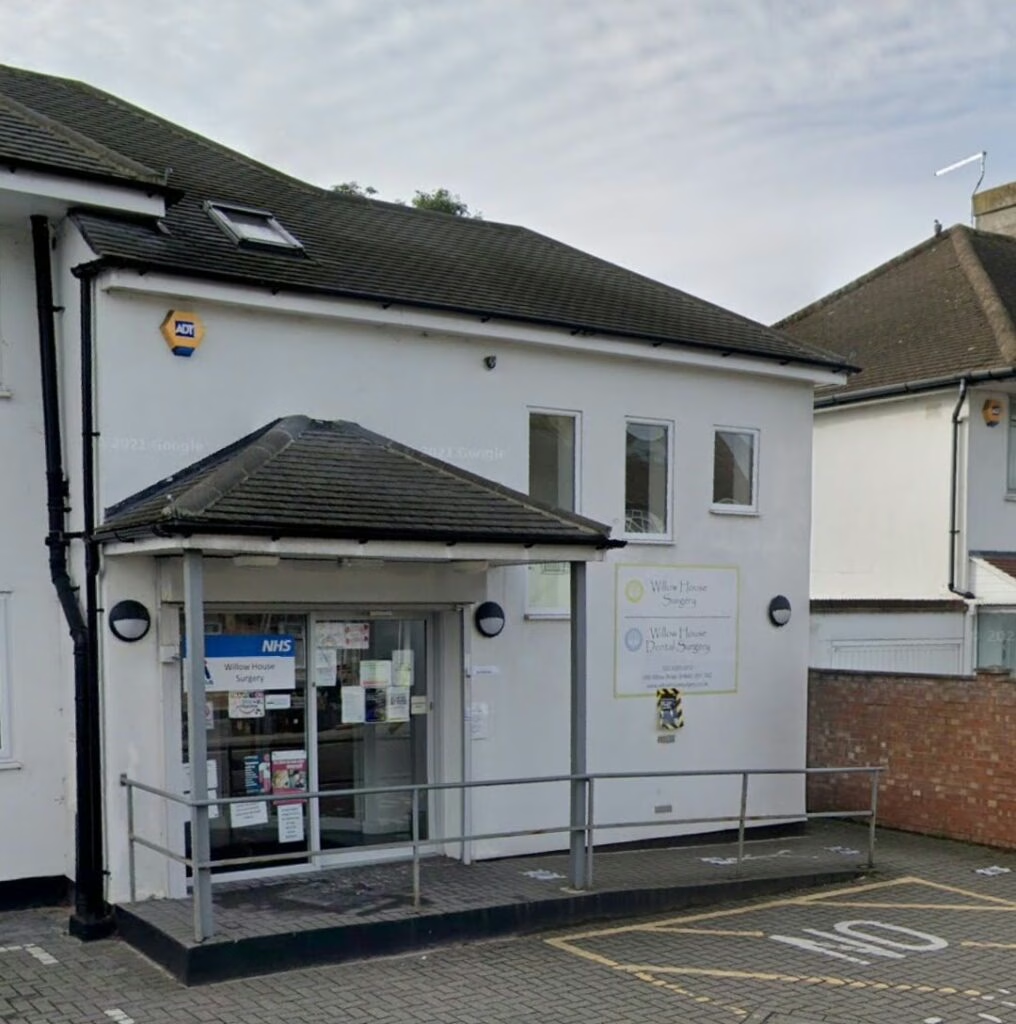
Professional ear wax removal Enfield Audiologists. Conveniently located in Willow House Surgery on the corner of WIllow Road and Orchard Way, with free on-site disabled parking, and free on street parking for up to 1 hour. We are the only ear wax removal clinic in Enfield that offer The Hearing First Waxfree Guarantee™ , so if you have a blocked ear, come to our ear wax removal Enfield clinic. We really are the ear wax removal experts in Enfield.
What to Bring for a Diagnostic Ear and Hearing Visit
A useful appointment begins before you step into the clinic. If you are coming to Hearing First Enfield for a diagnostic suite visit, bring anything that helps the audiologist understand your hearing history and current symptoms. That could include details of previous ear wax removal, earlier hearing tests, hearing aid settings or notes about tinnitus, pressure, blocked ears or discomfort. Even small observations can matter, because they help shape the assessment and reduce the need to repeat yourself later. You do not need to arrive with a large folder of paperwork, but a few relevant items can make the visit more productive. For many patients, the most helpful preparation is simply knowing what has changed, when it began and whether the issue affects one ear or both. If you are attending for a child, or supporting an older relative, make sure you also have the right consent and contact details to hand. Clear preparation supports better communication and a more efficient diagnostic process.
Useful Items to Have with You
- Your appointment details, including the date, time and clinic name, so you can check everything quickly on arrival.
- Your hearing aids, chargers, batteries or storage case, especially if you would like advice on fitting, maintenance or sound quality.
- A short written list of symptoms, such as blocked sensation, muffled hearing, itching, discharge or ringing in the ears.
- Any previous audiology reports, hearing test printouts or referral notes that might give context to your symptoms or concerns.
- Glasses, reading material or a companion if you rely on visual support for forms, conversation or following instructions.
What You Do Not Need to Worry About
You do not need to arrive with medical expertise or a flawless explanation. An audiologist will ask the right questions and guide the discussion. Even so, a few notes from home can save time and improve accuracy, particularly if your hearing has changed gradually and you have found it hard to describe clearly in conversation. It is also sensible to bring a list of medicines if you think they may matter to your general health or ear symptoms.
A Simple Preparation Tip
Put your documents, hearing aids and phone charger together the night before, so you are not hunting for them while trying to leave the house on time.
Why This Supports Diagnostic Accuracy
Good preparation gives the clinician a clearer picture of your ear health and hearing needs. That can make the appointment more focused, whether the outcome is advice, treatment, further testing or a referral for the next stage of care.
How Much Does Ear Wax Removal in Enfield Cost?
Published Payment Methods
- Credit cards
- Debit cards
- Contactless or NFC payments
Payment information may change. Confirm prices, insurance eligibility and accepted methods directly with the provider. Place attributes are provided by Google Maps.
Ear wax removal in Enfield starts at £34. The final price can vary depending on whether it is one ear or both, whether you book at peak or off-peak times, and how far in advance the appointment is made. The best thing to do is click the Book button below, then choose Find Appointments, where the most up-to-date prices will be shown.
21 Interesting Facts About Enfield
- Enfield Was the Birthplace of the ATM
The world’s first cash machine was installed at the Barclays Bank on Enfield High Street in 1967. It was used by actor Reg Varney (of *On the Buses* fame) in a publicity stunt, making him the first person to withdraw money from an ATM. - It Was Once Home to a Secret Gun Factory
The Royal Small Arms Factory in Enfield Lock produced weapons including the famous Lee–Enfield rifle. During WWII, it was so top secret that even locals didn’t know the full extent of its operations. - Charles Dickens Referenced It in *Oliver Twist*
Enfield is thought to have inspired part of the countryside scenes in *Oliver Twist*. Dickens often walked from central London to Enfield, absorbing the rural atmosphere on what was then the edge of the capital. - The Best Ear Wax Removal In Enfield
The very best ear wax removal in Enfield is now available at Hearing First Enfield at Willow House Surgery, on the corner of Orchard Way and Willow Road, just a stone’s throw from the big Tesco’s. Click here to book ear wax removal in Enfield now! - The Phantom Coach of Forty Hill
Legend says a ghostly horse-drawn coach appears near Forty Hall on misty nights. Locals claim it’s the restless spirit of a former resident — or a long-lost highwayman trying to flee with stolen gold. - Enfield Once Had a Wild Animal Park
In the early 1900s, the grounds of Trent Park featured exotic animals including bears and lions as part of a private menagerie. Rumours still persist of secret tunnels beneath the estate where creatures were kept. - The Ghost of a Saxon Warrior Haunts Whitewebbs Woods
Walkers in Whitewebbs have reported sightings of a ghostly figure in ancient armour. Some believe it’s the ghost of a warrior from the Battle of Enfield Chase — although no such battle is officially recorded. - The World’s First Modern Air Rifle Was Made Here
The innovative “Enfield Air Rifle,” developed in the 19th century, helped launch a new era of recreational and competitive shooting — and is now a collector’s item with a mysterious manufacturing history. - There’s a Hidden Door in Forty Hall That Leads to Nowhere
Inside Forty Hall, there’s an ornate door that opens onto a brick wall. Historians aren’t sure if it was part of an old servant’s passage or a 17th-century prank on nosy guests. - Enfield Town Park Has an Unmarked Well
Near the river loop in Enfield Town Park, there’s a mysterious brick circle believed to be the cap of a 19th-century well. Its origins and purpose remain undocumented — and it’s rumoured to be cursed. - There’s a Tree in Bush Hill Park That’s Older Than the USA
An ancient oak near the tennis courts is estimated to be over 300 years old. It was already a sapling when the Declaration of Independence was signed. - Enfield Chase Was a Royal Hunting Ground
Once covering thousands of acres, Enfield Chase was a private hunting reserve for the monarchy. Secret stashes of deer antlers and trap pits have been found in the surrounding woods. - The A10 Is Built Over a Roman Road
The modern A10, which runs through Enfield, traces the path of the ancient Roman road Ermine Street — once a major route from London to York. Archaeological digs have found Roman artefacts beneath it. - A Giant Pumpkin Once Blocked the New River
In the 1980s, pranksters rolled a massive pumpkin into the New River near Southbury Road. The resulting blockage caused temporary flooding and made the local paper. - Haunted Mirrors in the Dugdale Centre?
Staff at the Dugdale Arts Centre have reported unexplained reflections, flickering lights, and whispers late at night. One dressing room mirror was allegedly removed after repeated reports of “faces behind the glass.” - Enfield’s Name Means “Open Land of a Man Called Eana”
The town’s name derives from Old English “Eanafeld,” meaning “Eana’s open land or field.” Who Eana was, no one knows — but he left quite the legacy. - Trent Park Was a WWII Spy Base
During WWII, Trent Park housed high-ranking German POWs. British intelligence secretly recorded their conversations, leading to key insights about Nazi operations — a story kept secret for decades. - River Lea Flooded and Revealed a Sunken Boat
After heavy rain in 1993, a rarely seen Victorian fishing boat was exposed in the River Lea near Enfield Island Village. It was removed quietly and has never been displayed publicly. - There’s a Phone Box That Doesn’t Work — But Still Rings
A decommissioned red phone box near Bush Hill reportedly rings occasionally, even though the line was cut years ago. Locals jokingly call it “The Hotline to the Other Side.” - Ghost Monks Said to Walk the Path Behind St Andrew’s Church
Residents walking behind St Andrew’s on foggy nights have claimed to see silent, hooded figures gliding over the grass. The church itself dates back to the 12th century, adding weight to the legend. - Enfield Grammar School Has a Secret Room
Rumours persist of a sealed-off chamber beneath the school, once used for hiding valuables during the English Civil War. Whether it’s fact or fiction, it’s certainly not in the floor plans.
What to Expect When You Arrive for Your Appointment
Research Catalogue Results for Ear Wax Removal
- The auricular cough reflex: lateralization, prevalence, procedural determinants, and the role of examiner handedness. - van de Loo J, Mayer M, Sharaf K, Eckel H, Jansen L, Klussmann JP, Luers JC., 2026.
- High-definition otoscopic device for humanitarian mission: how i do it. - Lechien JR, Maniaci A, Kipsang MJ, Kibor M, Vaira LA., 2025.
- Use of Castor Oil in Dermatology: A Narrative Review. - Girdler K, Cabatu A, Olds H, Potts GA., 2026.
Source: Europe PMC. These are bibliographic matches, not personalised medical advice or an endorsement of a treatment.
Arriving at the diagnostic suite should feel orderly and predictable, with a clear check-in process and enough time to settle before your consultation begins. If you are visiting for ear wax removal, hearing assessment or hearing aid advice, the first few minutes are often used to confirm your details, discuss the reason for your attendance and get you ready for the next step. You may be asked about symptoms, previous ear problems, medication or any changes in hearing since your last visit. That opening discussion matters, because it helps the audiologist choose the most suitable approach. If you have concerns about wax, sudden changes in hearing or discomfort in either ear, mention them early. A calm arrival can also help if busy waiting areas are difficult for you, or if you need a little extra time to catch instructions clearly. Knowing what to expect can ease anxiety and help you make the most of the appointment.
Typical First Steps in the Clinic
Most patients start by confirming personal details and the reason for the visit, then move on to a conversation about current symptoms and previous treatment. The clinician may inspect the ears, review your history and explain whether microsuction, manual wax removal or another diagnostic step is likely to be appropriate. If you wear hearing aids, you may also be asked about comfort, performance and daily use. These early questions are not simply routine box-ticking, they are there to help the appointment focus on your actual needs.
How to Help the Consultation Go Smoothly
Speak openly about any pain, dizziness, discharge or sudden hearing change, because those details can influence the advice the audiologist gives. If you are unsure about a past diagnosis, say so. It is better to describe the problem plainly than to guess. If you are with a companion, let them add detail where useful, especially if your hearing makes it difficult to catch every instruction the first time.
A Small Comfort Tip
Take a few slow breaths before you go in, because a settled start can make it easier to hear, concentrate and answer questions clearly.
Why First Impressions Matter in Audiology
The opening part of the visit sets the tone for the rest of the appointment. When you arrive prepared and unhurried, the diagnostic process tends to feel clearer, more personal and easier to follow from start to finish.
More Information
For more information and to learn how to book ear wax removal in Enfield, click here.
Choosing a Route That Keeps the Visit Simple
For a visit to Hearing First Enfield, the best route is usually the one that is simplest, most familiar and least likely to be interrupted. That may mean a main road, an easy local turn or a known path that avoids confusion near the end of the journey. What matters most is arriving in a steady state, not taking the shortest route if it leaves you stressed, late or unsure about where to park. This is especially true when you are coming for hearing care, because pressure can make it harder to remember directions, listen closely to instructions or talk through symptoms in detail. If you are accompanying someone else, think about where they will feel most comfortable getting out of the car and how far they will need to walk. Planning the route well may seem small, but it can improve the whole experience and help the appointment begin with more confidence.
Things That Can Affect Your Route Choice
- Weather can matter too, because rain or ice may affect both driving and the short walk from vehicle to clinic entrance.
- Travel with a companion can change the best option, especially if they need easy drop-off access or time to help you inside.
- Quiet roads can reduce stress, but they can also be harder to follow if you are not familiar with the local layout.
- If you have a hearing difficulty, choose a route that lets you stay calm and alert, rather than one that keeps you under pressure.
- Public transport connections are worth checking if you would rather not drive or if parking is likely to be limited when you arrive.
- Roadworks and diversions may add time, so a slightly longer but more reliable route can be the better choice on the day.
A Route Choice That Often Helps
Many patients do best when they choose a route they have used before, even if it is not the absolute shortest. Familiarity can be more valuable than speed, because it reduces decision-making and gives you more room to focus on the appointment itself. That is useful if you need to talk through earwax symptoms, hearing aid issues or the results of a recent hearing test.
A Quick Reminder Before You Set Off
Check the route again on the morning of travel, even if you know the area well, because local traffic changes can alter the best way to get there.
Why a Simple Route Helps Hearing Care
When the journey is predictable, you arrive more settled, which helps you listen, respond and take in the clinician's advice. For diagnostic and audiology appointments, that can make a real difference to the quality of the visit.